In 2026, the traditional security landscape has fundamentally shifted. For decades, the sound of a loved one's voice was the gold standard of identity verification. Today, that standard is obsolete. AI voice-cloning technology now requires as little as three seconds of audio—often harvested from a public social media clip or a simple voicemail greeting—to create a near-perfect synthetic duplicate.
When a senior receives a call from a "grandchild" in distress, the emotional part of the brain overrides logical skepticism. This is why traditional software "blocks" often fail; they cannot patch the human vulnerability of trust. Our team at Scam-Sentinel approaches this as a Systems Architecture problem. If the "voice" layer of security is compromised, we must deploy a Behavioral Layer that remains un-hackable.
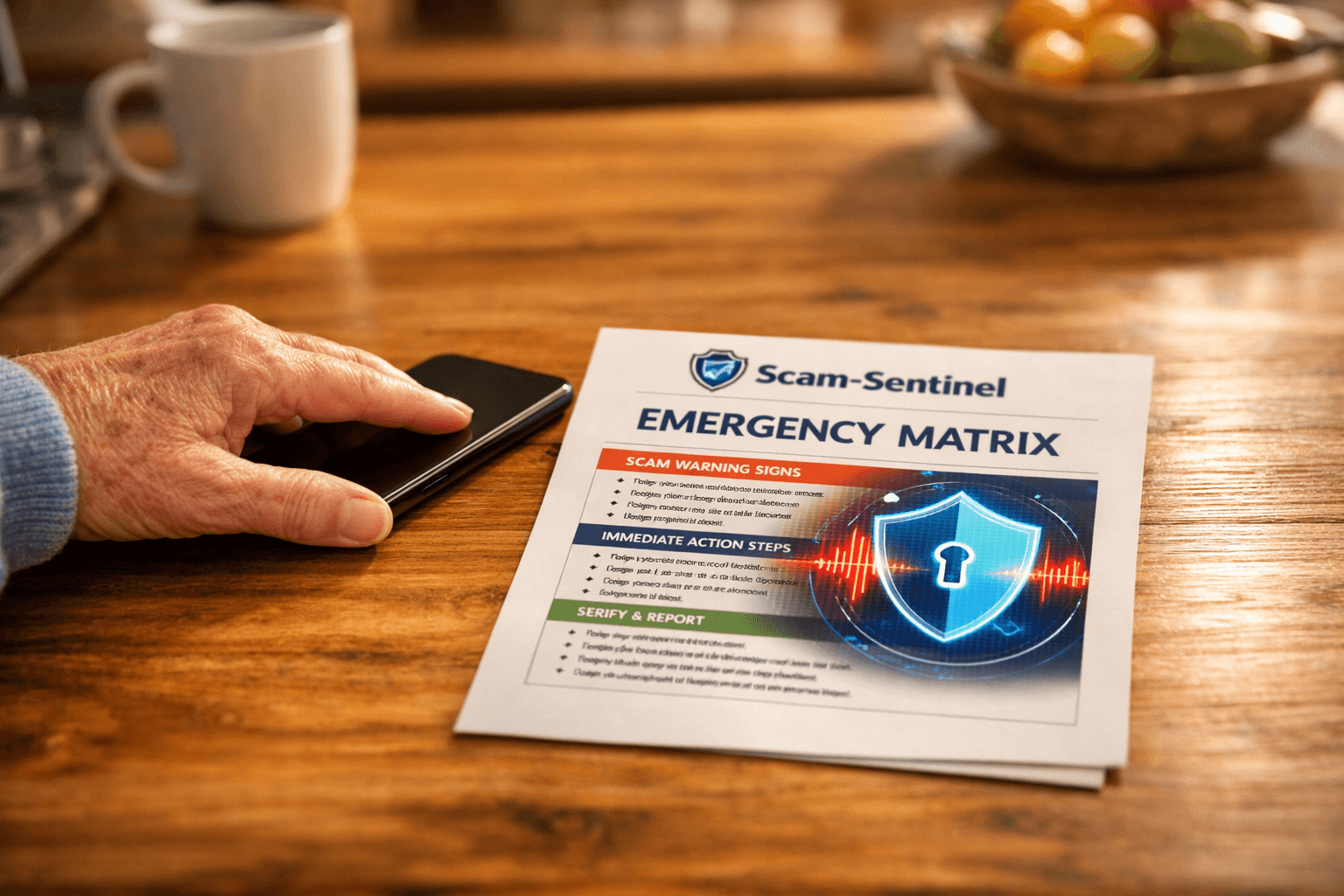
Identity is no longer proven by how someone sounds, but by what they know. To facilitate this transition, The Scam-Sentinel Team has finalized the Family AI Scam Defense Protocol. This industrial-grade system replaces vague 'be careful' advice with a documented behavioral routine that any senior can follow under duress. Your family safety is now a Covenant, not a surveillance contract. Download the full 10-page system today.
Disclaimer: This protocol is for educational and organizational purposes only. It establishes behavioral communication standards within families and does not replace official emergency services, local law enforcement, or professional legal and financial counsel.